Part 1 of 2
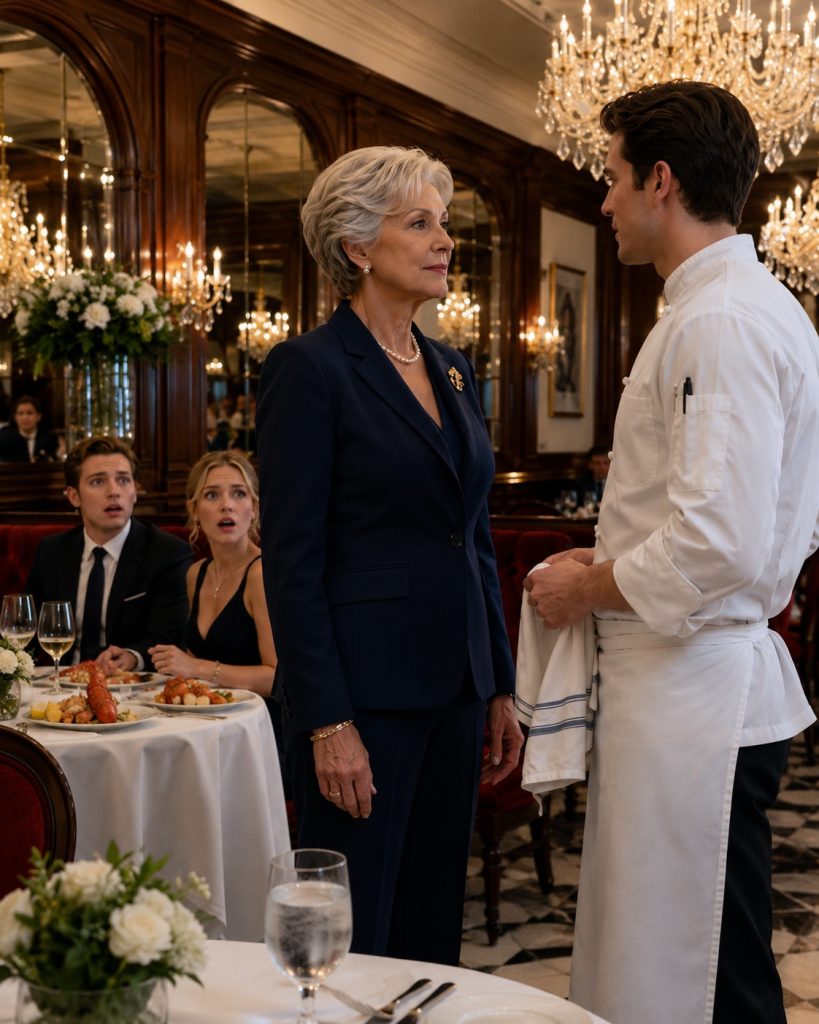
The water glass was cold in my hand, but I never lifted it.
That was all they had allowed me. Water. No menu. No meal. No question about whether I wanted to order for myself. Just a glass set in front of me while the rest of the table waited for lobster and wine under crystal light.
My daughter-in-law Marlene was the one who made it happen. She spoke to the waiter with that polished sweetness people mistake for class when they have never had cruelty served to them with perfect diction.
“We don’t need anything for her,” she said. “Water is fine.”
Then my son added the part that settled over the table like smoke.
“You should know your place, Mom.”
I looked at him. At the man I had once walked to school in the rain because we could not afford a second umbrella. At the boy I had fed before myself more times than he would ever know. At the grown man who now could not even meet my eyes while agreeing to humiliate me in public.
And I said the only thing I wanted them to remember later.
“Noted.”
Marlene gave the smallest pause, as if my calm had interrupted the script. I think she had wanted emotion. Maybe anger. Maybe the kind of wounded reaction people call embarrassing when they are the ones who caused it. But I had spent too many years learning what silence can do in a room full of arrogant people.
My name is Helen. I am sixty-four years old, and I did not become the kind of woman who survives humiliation by accident.
I raised Michael alone after his father vanished when he was still young enough to believe a missed promise might be corrected by tomorrow. Tomorrow never came. So I worked. I cleaned office buildings before sunrise. I served lunch in places where men snapped their fingers for more coffee. I cooked in industrial kitchens that smelled of onions, bleach, and exhaustion. I saved every dollar I could. Paid every bill I had to. And built a life that never looked glamorous from the outside, but held together because I made it hold.
Michael never missed school because of money. He never went without books. He went to college because I made sure tuition was paid, even when that meant I wore shoes too old and kept my coat one winter too long.
When he fell in love with Marlene, I welcomed her. I told myself not every sharp look means disrespect. Not every dismissive tone means contempt. Not every woman who refuses to call you Mom is trying to erase your place in your own family.
I told myself many things.
The early years of their marriage were not obviously hostile. Marlene was cool with me the way certain women are cool with their mothers-in-law, as if warmth were a finite resource that might be depleted by sharing it with someone outside their curated circle. She never insulted me directly. She was too intelligent for that. Instead she created distance through omission. Forgetting to include me in conversations. Redirecting plans that involved me. Answering questions I had not asked while quietly leaving the ones I did ask unanswered.
Michael watched and said nothing. That was his particular contribution. Not cruelty, but permission. The silence of a man who had learned to keep the peace by allowing other people to define it for him.
I had been patient. I want to be honest about that, because patience is not nothing. It costs something to absorb years of small dismissals without reaction. It costs something to keep arriving at family gatherings with warmth you are not certain will be returned. It costs something to love someone through the adult they have become when parts of that adult feel unrecognizable to the mother who raised them.
But I had done it. Year after year.
The invitation to dinner came a week earlier. Michael called and said they wanted to reconnect. Said things had felt strained. Said Marlene’s parents would be joining us, but it would still be intimate.
That word should have warned me.
Intimate cruelty is often the most carefully arranged kind.
I got ready with more care than I wanted to admit. A pearl-gray dress I only wore for special occasions. Small earrings. A little lipstick. I even set my hair properly, because some foolish part of me still believed being treated well might begin with arriving beautifully.
The restaurant was one of the most exclusive in the city. High ceilings, chandeliers, white tablecloths, the kind of silence that only expensive places can manufacture while still sounding full. The staff moved like choreography. The menus were black leather with no prices.
Marlene was already seated when I arrived, elegant and scented with something expensive enough to announce itself before she did. Her parents sat beside her, comfortable in the way people are when they assume the room was made for them. Her father, a large man named Gerald who ran a commercial property firm, held his wine glass with the practiced ease of someone who had long ago decided he deserved the best table in every room. Her mother, Diana, wore her jewelry the way some women wear armor.
Michael stood when I approached, but only halfway, as though affection had become something he rationed now.
My seat was at the edge of the table. Not accidental. Intentional. A chair placed just far enough off-center to make a point without saying one out loud.
The waiter approached. Marlene ordered for the table before anyone else spoke.
Four lobster thermidors. Large. White wine. Premium.
Then came the correction. Not five. Four. And then the water for me. Delivered gently, almost apologetically by the young waiter whose discomfort was visible to anyone paying attention.
I let it happen. Because once you understand you are being tested, you have two options: react on their terms, or let them keep speaking long enough to reveal themselves completely.
So I sat there while the food arrived. Huge lobster tails. Butter glistening. Steam rising. Their plates heavy and beautiful in the low light. My water looked almost decorative by comparison.