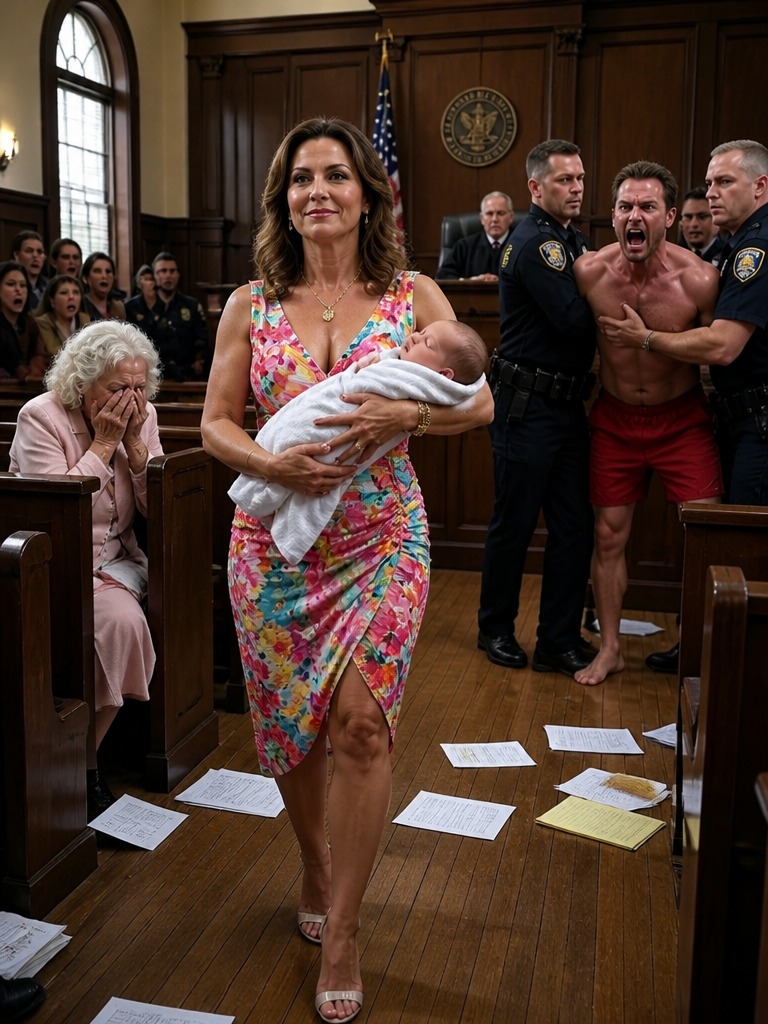
My mom and brother started laughing when I walked into the courtroom, “Haha, we’re going to strip her of every thing, she’s too pathetic to fight back anyway.”
But they didn’t know one thing about me, and the moment the judge looked at me, he said, “Victoria Owens? Is that you?”
I was twenty-five years old the morning the people who shared my blood openly mocked me in a court of law.
The sound of their amusement ricocheted off the marble floors of the Courthouse. My mother, Eleanor, leaned toward my older brother, her whisper engineered to carry across the aisle.
“We are going to strip her down to the studs,” Eleanor hissed, a vindictive gleam in her pale eyes. “She’s too pathetic to mount a real defense anyway.”
Beside her, Julian snorted. He adjusted the lapels of his tailored suit—a suit purchased with money that rightfully belonged to me—and shot me a look of pure, unadulterated pity. My family had always misinterpreted my silence as submission. It was the most catastrophic miscalculation they had ever made.
“Calling docket 14B. Owens versus Owens,” the bailiff announced.
I stepped toward the center podium. Judge Harrison Vance shuffled through the preliminary filings. As my footsteps ceased, he lifted his head. Eleanor’s smug little laugh died mid-breath. The rigid judicial mask the Judge wore dissolved into profound surprise.
“I haven’t had the pleasure of seeing you since… the Vanguard Scholarship oral defense panel three years ago,” the judge said gently. “You were the unanimous top candidate.”
A collective murmur rippled through the gallery. For years, my family had aggressively circulated the narrative that I was a directionless burden, hiding my acceptance letters from the world.
“Excellence?” Julian scoffed aloud, his fragile ego threatened. “Her?”
Judge Vance’s eyes zeroed in on my brother. His warmth vanished, replaced by a glacial, piercing authority. “This court requires absolute decorum,” he warned, before turning back to me. “Please approach, Miss Owens. I wish for you to present your timeline first.”
Eleanor leaped to her feet. “Wait! I object! Julian and I filed the primary claim regarding the trust!”
Judge Vance didn’t even make eye contact with her. “You will speak when you are spoken to, Mrs. Owens.”
I unclasped the brass lock on my leather folder. My mother thought she was here to witness my financial execution, entirely unaware that I had built the gallows. Her breathing grew audibly erratic as I laid the first document onto the bench—the exact Vanguard Scholarship certificate the judge himself had signed years ago.
“Establish your baseline, Miss Owens,” he nodded. “Go on.”
I didn’t resort to tearful accusations. I simply reached into my folder and pulled out the second document. A shadow crossed my mother’s face as I slid the heavy parchment across the polished wood. I knew exactly how I wanted to dismantle them—with the cold, unyielding blade of paper and ink.
And the exact moment Judge Vance’s eyes landed on the very first line of that second document…
My mother’s breathing grew audibly erratic, hitching in her throat like a stalling engine, as I laid the first document onto the magistrate’s bench.
It was a crisp, heavy-stock certificate, embossed with a gold seal, my name printed across the center in elegant, bold calligraphy.
Judge Vance leaned over, sliding his reading glasses back onto the bridge of his nose. As his eyes scanned the text, his expression softened into a look of genuine pride—an emotion I hadn’t felt directed at me by an authority figure in nearly a decade.
“Ah,” he murmured, his voice echoing slightly in the cavernous room. He ran his index finger lightly over the ink signature at the bottom. “Your academic merit award from the Vanguard Foundation. Summa Cum Laude. I remember signing this exact document myself.”
A sharp, collective gasp escaped from a row of spectators in the back.
“What does some ancient school paper have to do with this trust dispute?” Julian muttered fiercely, his voice cracking with defensive panic.
Judge Vance didn’t bother to lift his eyes to address my brother. He simply looked at me and nodded. “Establish your baseline, Miss Owens. Go on.”
I placed the second document beside the first. It was a comprehensive financial ledger, printed directly from a certified forensic accountant. Precise, transparent, and absolutely untouched by the Owens family rot.
“This document, Your Honor,” I stated, my voice ringing clear and steady…
The Architecture of Severance
Chapter 1: The Echoes of Contempt
I was twenty-five years old the morning the people who shared my blood openly mocked me in a court of law.
The sound of their amusement ricocheted off the austere marble floors and heavy oak benches of the Fulton County Courthouse, sharp and carelessly ugly. It was a sound I had known my entire life, but here, under the humming, institutional glare of fluorescent lights, it felt as though the building itself was rejecting the noise.
My mother, Eleanor, leaned toward my older brother, her perfectly manicured hand shielding her mouth in a pantomime of discretion. Her whisper, however, was engineered to carry across the aisle.
“We are going to strip her down to the studs,” Eleanor hissed, a vindictive gleam dancing in her pale eyes. “She’s too pathetic to mount a real defense anyway.”
Beside her, my brother Julian snorted, not even bothering to disguise his sneer. He adjusted the lapels of his expensive, tailored suit—a suit purchased with money that rightfully belonged to me—and shot me a look of pure, unadulterated pity.
I remained standing at the plaintiff’s table. I didn’t flinch. I kept my hands loosely clasped in front of me, my pulse maintaining a steady, rhythmic thrum despite the suffocating weight of betrayal pressing against my ribs. The air in the room tasted of lemon polish, old paper, and the distinct, metallic tang of anxiety. For years, I had envisioned a courtroom as a sacred sanctuary where objective truth reigned supreme. But standing there, breathing in the stale air, I realized it wasn’t a sanctuary at all. It was a slaughterhouse.
Eleanor caught my gaze and offered a patronizing smirk, tilting her head like a predator assessing a wounded bird. “Don’t fret, Victoria,” she cooed, her voice dripping with synthetic sweetness. “We’ll leave you with just enough capital to rent a modest little room somewhere. After all, you’re so accustomed to surviving on the scraps we throw you.”
I offered no response. I let the silence stretch, thick and impenetrable. My family had always misinterpreted my silence as submission. They mistook my quiet endurance for a lack of intellectual spine. It was the most catastrophic miscalculation they had ever made.
At the front of the room, the bailiff cleared his throat, his deep voice slicing through the low murmur of the gallery. “Calling docket 14B. Owens versus Owens.”
A few heads in the spectator benches turned in our direction. The bitter irony of the case name wasn’t lost on anyone. Family tearing into family.
I picked up my slim, leather folio and stepped out from behind the table. I walked toward the center podium, my low heels tapping against the marble in a measured, deliberate cadence. Tap. Tap. Tap. I wasn’t rushing. I wasn’t shrinking.
At the elevated bench, the presiding magistrate, Judge Harrison Vance, was shuffling through the preliminary filings. He was an older man with silver hair and the exhausted, perceptive eyes of someone who had spent decades untangling human misery. As my footsteps ceased at the podium, he finally lifted his head.
Eleanor’s smug little laugh died mid-breath.
For a fraction of a second, the entire courtroom seemed to experience a drop in barometric pressure. Judge Vance’s thick gray brows shot upward. The rigid, judicial mask he wore instantly dissolved, replaced by a profound, unmistakable softening of his features. He leaned forward over the heavy oak barricade, his gaze locking onto mine.
“Victoria Owens?” His voice carried a rich warmth, laced with genuine surprise and something deeply, surprisingly human. “Is that really you?”
Behind me, I heard the sharp intake of my mother’s breath. Julian shifted abruptly in his chair, the leather creaking under his sudden tension. The fundamental balance of power in the room had just tilted, and I felt the quiet, electric thrill of absolute certainty sing through my veins.
Because there was one crucial variable Eleanor and Julian had failed to account for. They knew the frightened girl they had spent two decades crushing. But they were about to discover that I was no longer that girl.