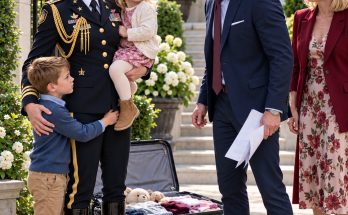
They Humiliated My Kids At Thanksgiving, Then Richard’s File Arrived.


Part 1 of 2


When I texted my family, “Don’t invite us again. We are not your joke anymore,” I expected anger.

I expected insults.


I expected my sister to call me dramatic and my father to say I had embarrassed the family again.

I did not expect terror.


My brother-in-law Richard called me thirteen times in four minutes.

My mother cried into my voicemail so hard I could barely understand a word.

My sister Vanessa screamed through a text message, “What did you do?!”


I was standing in my kitchen when it happened, barefoot on the cold tile, with the little stove light glowing over a table covered in investigation files.

Bank statements.

Vendor invoices.

Email printouts.

A timeline I had written by hand because sometimes paper tells the truth more honestly than a screen.

I looked at Richard’s name appearing over and over in places it had no business being, and I whispered to the empty room, “You should’ve treated my children better while you still had the chance.”

But it started earlier that night.

It started in my parents’ living room, where my mother had decided Thanksgiving needed to look like Christmas had already arrived.

There was garland across the fireplace.

There were red and green bows tied around the banister.

There were desserts on the sideboard, candles on the dining table, and one framed family photo turned slightly toward the room like my mother wanted it watching too.

My kids had been excited in the quiet way children get excited when they are trying not to ask for too much.

My daughter, eight years old, had worn her plain blue dress with a cardigan she loved because the sleeves were soft.

My son had asked twice in the car if we were sure everyone was invited to open presents.

I told him yes because that was what my mother had said.

“Grandkids only,” she had announced in the family chat.

She had sent little gift emojis afterward.

I should have known better.

I had grown up in that house.

I knew my parents’ love always came with a measuring tape.

Who made them look good.

Who embarrassed them.

Who gave them bragging rights.

Who forced them to answer awkward questions at holiday dinners.

I had spent most of my adult life trying to stop auditioning for people who had never planned to clap for me.
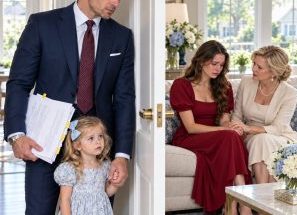

But children make you hope.

Children make you believe that maybe grandparents will soften.

Maybe they will look at small faces and choose kindness.

That night, my children stood near the fireplace while the other grandchildren tore through presents like a prize table.

The first box was an iPhone.

My mother squealed when my niece opened it, filming the whole thing with her phone held high.

The second was a gaming console.

My father chuckled and said, “Now that’s a real gift.”

Then came a small velvet case with a gold bracelet inside.

Vanessa lifted her glass and smiled like a woman watching a stock she owned go up.

Her son Caleb waved wrapping paper around and shouted that Grandma always picked the best stuff.

My kids waited.

My son kept one hand around his sister’s because she was smaller, and because he has always tried to be older than he is.

My daughter looked from box to box with a hopeful little smile that got thinner every time another name was called.

Then the presents were gone.

There was no box with my son’s name.

There was no bag with my daughter’s name.

There was not even a card.

The room went quiet the second my son realized it.

I saw the understanding move across his face before he could hide it.

That was the part that nearly broke me.

He did not ask where his gift was.

He did not complain.

He simply looked at the empty space on the floor, then at me, like maybe he had missed an instruction, like maybe good children were supposed to understand why they had been left out.

Then Caleb laughed.

“Guess they didn’t earn anything this year.”

He was a child, but he had learned that cruelty somewhere.

Children usually do.

They learn it from the adults who reward it, laugh at it, or sit silently while it happens.

Nobody corrected him.

My father sat at the head of the table with his napkin across his lap and his expression hard with approval.

Vanessa took a slow sip of wine and watched me over the rim of her glass.

Richard leaned back in his chair like he had no reason to be uncomfortable.

My mother lowered her phone just enough for her voice to carry.

“Well,” she said, “some children make their grandparents proud.”

My daughter’s face collapsed.

It was not dramatic.

It was worse.

It was small.

Her mouth trembled once, then she pressed her lips together because she knew crying would give the room something else to judge.

Her little hands curled into the sleeves of her cardigan.

My son looked down at her, then back at me, and I watched him try to swallow his own hurt so he could take care of hers.

That was when I stood up.

Not quickly.

Not with shouting.

Slowly.

The way you move when a room has finally shown you exactly what it is.

“You forgot something,” I said.

Vanessa smiled wider.

“Did we?”

Caleb tossed a strip of wrapping paper into the air.


Next Part ==> 2