Christopher’s breathing quickened.
“You were completely unconscious!”
“No, I was not,” Raymond stated firmly.
Silence filled the room.
“I heard every single word you spoke,” Raymond added.
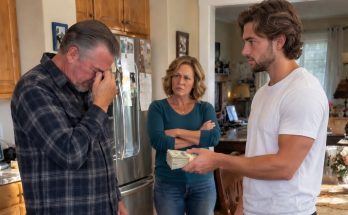
Christopher’s expression collapsed.
“I heard you ask Wallace how much longer the process would take. I heard you argue that moving me to a hospital was a bad idea because dying at home would look far more peaceful. I heard you discuss what actions to take if I regained my speech before you could get me to sign over those financial documents.”
Christopher looked at the officers.
“You have no legal authority to detain me here!”
“No one is placing you under arrest at this exact moment,” the officer informed him coldly. “However, you are required to remain fully available for official questioning.”
That frightened him more than handcuffs seemed to.
“I am going to contact my legal team immediately.”
He headed toward the entrance.
Raymond didn’t stop him.
“Christopher,” Raymond called out softly.
His nephew turned.
“For twenty years, I invited you to sit at my dining table because I believed you were the only real family I had left in this world,” Raymond said with heavy sorrow. “If I had passed away believing you were simply overly ambitious, I might have found a way to forgive you. But I was lying in that bed, listening to every word. You will never be able to explain that away with money.”
Christopher left without replying.
The consequences caught him quickly.
Forty minutes later, after a frantic call, he attempted to flee the jurisdiction.
The investigation moved rapidly because Dr. Wallace had made one critical mistake: he kept meticulous private records, perhaps as protection against Christopher or simply because he never expected scrutiny.
At his clinic, investigators found records of unlisted paralytic compounds purchased outside normal pharmacy protocols and patient logs contradicting Raymond’s official charts.
They also recovered deleted messages.
Then came the decisive evidence.
An audio recording.
Christopher had secretly recorded a conversation with Wallace weeks earlier.
Whether he wanted protection or future leverage was unclear.
On the recording, the men explicitly discussed Raymond’s decline, methods for prolonging his paralysis, and their fear that he might regain mobility before Christopher finalized the transfer of corporate assets.
It was no longer suspicion.
The prosecution now had direct evidence.
Christopher was apprehended later that afternoon after a minor highway collision. Driving too fast through heavy rain, he’d lost control on a slick turn.
He survived with a fractured arm and severe bruising.
Ironically, the ambulance first took him to a facility connected with the same healthcare network where Wallace practiced.
When Christopher realized where he was, he demanded another doctor.
Dr. Wallace was arrested hours later.
When Harrison called with the news, Raymond listened silently.
I expected satisfaction.
There was none.
“Do you not find the situation deeply ironic?” I asked gently.
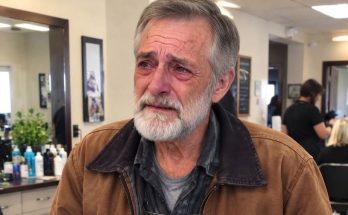
“A week ago, I might have found some dark humor in it,” Raymond admitted quietly, looking down at his worn hands.
“Why not now?”
“Because I raised Christopher myself,” Raymond confessed with a sigh. “He was not my biological son, but I welcomed him into my heart and home. I taught him how to navigate the business world. I solved his personal problems. I gave him financial support whenever he asked for it, and even when he did not. I genuinely believed that by doing those things, I was building a real family.”
He looked at me.
“Perhaps the only lesson I successfully taught him was that everything in life carries a price tag.”
The months that followed were physically demanding.
Raymond underwent intensive therapy to relearn basic movements: climbing stairs, buttoning shirts, holding coffee without shaking.
Once the legal proceedings were moving forward, I planned to leave.
One morning, I entered his study.
“We need to have a serious conversation, Mr. Raymond,” I began.
“Conversations starting with that tone rarely bring good news,” he noted, setting his pen down on the desk.
“You are recovering well now,” I explained gently. “Theodore and I ought to start looking for our own place to live.”
He immediately shook his head.
“No, absolutely not.”
“Mr. Raymond…”
“First of all, stop calling me Mr. Raymond after spending three weeks watching me fake physical incompetence,” he insisted with a slight grin.
I smiled.
“Secondly,” he continued in a serious tone, “I have no intention of turning the incredible debt I owe you into some kind of transactional obligation. If you genuinely desire to move out, I will gladly provide whatever financial assistance you need to establish yourself wherever you choose. If you prefer to stay here and work, I will offer you a formal contract with standard compensation and normal working hours. But I am not going to buy your continued presence out of guilt.”
His honesty disarmed me.