PART 2
I woke in the hospital with a concussion, hypothermia, carbon monoxide exposure, and an electrical injury.
A nurse named Sarah stood beside me.
“You’re safe,” she said. “Your neighbor found you in time.”
Then she explained that a local reporter had been in the emergency department covering the winter storm. After speaking with paramedics and my neighbor, he learned that I had just returned from burying James—and that my family had repeatedly refused to help me.
Sarah turned on the television.
The headline read:
**WIDOW RETURNS TO DISASTER AFTER FAMILY REFUSES HELP**
The report showed my damaged house and displayed the messages my relatives had sent.
**We’re busy. Take an Uber.**
**Why didn’t you plan better?**
My private heartbreak had become public.
“Your family is outside,” Sarah said. “Do you want to see them?”
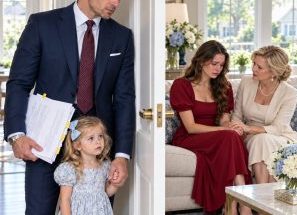
Before I could answer, Troy rushed into the room.
“We just saw the news,” he said. “They’re making it sound like we abandoned you.”
He did not ask how I felt.
My mother entered next, more concerned about her reputation than my condition.
“People are attacking us online,” she complained. “Your father’s boss has called, and relatives are asking questions.”
Troy began planning a public statement.
“We’ll say there was a misunderstanding,” he suggested. “Maybe we were organizing a surprise for you.”
They were not there to comfort me. They were there to rewrite the story.
A hospital social worker, Ms. Patel, entered with my doctor.
My mother immediately announced that I would stay with them after discharge.
“Families support each other,” she said, suddenly performing the role of a devoted parent.
Nurse Sarah stepped closer to my bed.
“Amelia has choices,” she said firmly.
Ms. Patel explained that the community had responded generously. A hotel had offered me a temporary suite, a restoration company had volunteered to repair my home, and a meal service had offered assistance.
My mother’s expression changed.
“You are not staying with strangers,” she warned. “You’re coming home so we can clean up this embarrassment.”
I looked around the room.
Troy was worried about his business clients.
My mother was worried about her social circle.
My father remained silent.
Then I looked at Sarah, a stranger who had stayed beside me while I was frightened and unwell.
“I would like to hear more about the hotel,” I said.
My mother stared at me.
“After everything we’ve done for you?”
Something inside me finally broke open—not with anger, but with clarity.
“What have you done?” I asked quietly. “When James was dying, you were too busy to come. When I buried him, the flights were too expensive. When I returned after thirty hours of travel, you told me to take an Uber. When my home flooded, you chose your bridge club.”
Troy became defensive.
“We have our own lives, Amelia. We can’t abandon everything whenever you call.”
“Picking me up after I buried my husband was not asking for everything,” I replied. “Making sure my house had heat during a storm was not asking for everything. It was the minimum.”
“We didn’t know it was an emergency,” he argued.
“You never asked.”
The room went silent.
“You never asked about James’s funeral,” I continued. “You never asked whether I was coping. You never asked whether I was safe.”
My father suggested grief was making me irrational.
“I have never been more clear,” I said. “For thirty-five years, I accepted scraps and convinced myself they were love. I don’t have the strength to keep making excuses for you.”
My mother clutched her purse.
“So you’re choosing strangers over your own family?”
“I’m choosing kindness over obligation. I’m choosing the people who actually showed up.”
I turned toward Ms. Patel.
“I’ll accept the hotel.”
Troy shook his head.
“Don’t expect us to be waiting when you decide you need us again.”
“That’s the point,” I whispered. “I could never depend on you. Now I’m finally going to stop trying.”
My family walked out.
When the door closed, I felt as though I could breathe for the first time.
Sarah squeezed my hand.
“That took courage.”
“It feels like I’ve lost them,” I admitted.
“No,” she said. “You put down something heavy that you were never meant to carry.”
PART 3
That evening, I moved into a warm hotel suite filled with flowers from hospital employees.
The restoration company began repairing my home. Volunteers brought meals, clothing, and supplies.
Strangers were helping me rebuild while my own family remained distant.
Sitting beside the hotel window, I whispered into the quiet room:
“I finally stood up for myself, James.”
Over the next three months, my physical injuries slowly healed. The deeper recovery took longer.
I joined a support group for people who had lost partners. I learned that grief was not weakness. It was love searching for somewhere to go.
When my home was repaired, Diane began visiting every Sunday for coffee. She had saved my life, but she also became the caring presence I had always hoped my mother would be.
My biological family rarely contacted me.
Mom sent a generic card. Troy called once, mainly to complain that the news story was hurting his reputation. I answered politely but kept my distance.
Six months after James’s death, I used part of his life-insurance money to establish the James Henderson Memorial Scholarship. It provided emergency travel funding to the families of students working or studying overseas.
I wanted no one else to face an international crisis completely alone.
We held the scholarship launch in my garden. The tomatoes James had loved were finally ripe.
My parents and Troy sent their regrets.
But the garden was still full.
Diane attended. Sarah came from the hospital. Gloria, the airport employee who had helped with my suitcase, was there. Even Paul, my rideshare driver, sent a card.
As I presented the first scholarship to a student traveling to Japan, I looked at everyone around me and understood something important.
Family was not simply shared blood.
Family was action.
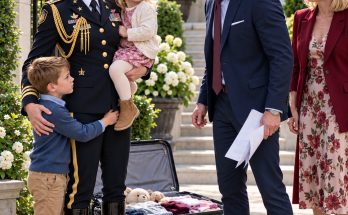
Family answered the phone during a crisis. Family helped collect your belongings when your suitcase broke open. Family noticed water escaping beneath your door.
A week later, I received a handwritten letter from my father.
He did not offer excuses. He admitted that he had failed me and wrote that James would have been proud of the woman I had become. He asked whether we might someday build a different relationship—one based on honesty rather than old expectations.
I did not call immediately.
When I finally felt ready, I agreed to meet him for lunch. The conversation was uncomfortable and careful, but it was genuine.
We began rebuilding slowly, with clear boundaries.
My mother and Troy remained distant, and I accepted that I could not force them to change.
One year after James died, I returned to the airport for a flight to Singapore. I planned to visit his grave and tell him about the scholarship, my repaired home, and the people who had become my chosen family.
Before boarding, I sent a message to our group chat.
**Heading to the gate now.**
Replies appeared immediately.
**Safe travels.**
**We love you.**
**Message us when you land.**
I smiled and walked toward the plane.
A year earlier, I had arrived at that same airport exhausted, grieving, and begging my relatives for a ride.
Now I understood that I was not defined by the people who had refused to love me properly.
I was defined by the courage I found within myself—and by the family I built from the people who chose to stay.
The well had never been empty.
I had simply been searching for love in the wrong place.