Part 1 of 2
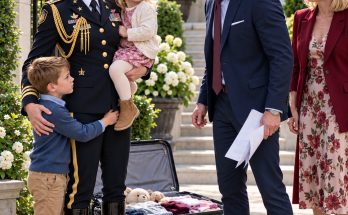
My sister laughed when she saw me standing in my military dress blues on my wedding day, and for one strange second, I noticed everything except her face.
The preparation room at Marine Corps Base Quantico smelled like old wood polish and fresh lilies.
The light over the mirror was warm enough to soften the edges of the room, but not enough to soften what was waiting on the chair across from me.

An ivory designer gown hung there in clear plastic, untouched, expensive, perfect, and unwanted.
My mother had mailed it two weeks earlier without a note.
No phone call.
No question.
No “Are you happy?”
Just a gown, boxed and delivered like a final correction.
That was how my family loved when they remembered to love at all.
They sent instructions and called them care.
I stood in front of the mirror and fastened the last button of my dress blues with hands that had signed casualty letters, held radios through dust and smoke, and stayed steady in places where fear had a sound of its own.
That morning, those same hands trembled.
Not from doubt.
From the strange weight of finally letting myself be seen.
The midnight-blue jacket sat sharp against my shoulders.
My medals rested where they belonged.
The four silver stars beneath the warm light looked almost unreal, even to me.
General Rebecca Hayes.
I had worn that title in briefing rooms, command centers, memorial services, and hearings where every word had to be exact.
Still, seeing it on my own wedding day felt different.
The uniform was not a costume.
It was not a statement meant to irritate anyone.
It was the skin my life had earned.
Outside the door, guests were arriving.
Dress shoes clicked against stone.
Someone laughed softly, then went quiet.
A man cleared his throat near the hallway, and farther away a group of Marines joked for half a second before discipline settled over them like a door closing.
At the altar, Daniel Mercer was waiting.
Daniel was not a loud man, and maybe that was why I trusted him.
He did not perform love for an audience.
He showed up with coffee before long hearings, kept spare batteries in the kitchen drawer because he knew I forgot them, and once drove three hours in bad weather just to sit beside me in a hospital waiting room after one of my former Marines had been injured.
When I told him I might wear my dress blues, I expected the pause people always gave me when they were trying to decide how much of me was convenient.
He did not pause.
“If the uniform helped shape your life,” he said, “then wear it proudly.”
Then he looked at me like the answer had been obvious.
“I’m not marrying a costume, Rebecca. I’m marrying you.”
That sentence had carried me through the last two weeks.
It carried me that morning, too, until my phone buzzed on the makeup table beside the printed chapel schedule.
The screen showed 9:12 a.m.
Vanessa.
My younger sister had always known exactly where to press.
Her first message appeared before I could unlock the phone.
You’re really wearing that military costume to your own wedding?
I stood very still.
Then came the second.
Trying to prove you’re too tough to be feminine?
The third came fast enough to feel rehearsed.
Don’t embarrass the family in front of actual important people.
I stared at that last line until the screen dimmed.
Actual important people.
There it was.
Not family.
Not joy.
Not even Daniel.
Just the old scoreboard Vanessa had been keeping since childhood, where worth meant beauty, charm, approval, and the ability to make other people comfortable.
My sister could sharpen cruelty until it looked like elegance.
She had done it at school events, birthdays, promotions, and every family dinner where my accomplishments had been treated like awkward weather.
When I made captain, she asked if I still had to wear “those boxy little outfits.”
When I made colonel, she joked that no man liked being outranked at home.
When I became a general, my mother said, “That’s wonderful,” then asked whether my hair had to be so severe in the official photograph.
A person can survive war and still be wounded by the kitchen table.
I turned the phone face down.
I was not going to answer.
That was the first gift I gave myself that day.
I did not argue.
I did not explain.
I did not bleed in front of someone who had brought a knife and called it concern.
A knock came at the door.
Before I could respond, it swung open.
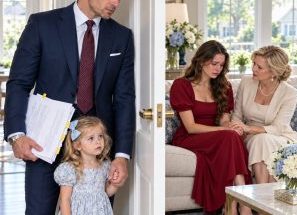
Vanessa stepped in first, wearing a fitted champagne-colored dress that probably cost more than my first apartment’s monthly rent.
Her blonde hair fell in perfect waves over one shoulder, and her confidence entered the room before she did.
My mother followed, adjusting pearl earrings with nervous little touches.
My father came last, already wearing the heavy, disappointed expression he had used on me since I was old enough to disappoint him.
Vanessa looked me over slowly.
Not like a sister seeing a bride.
Like a judge inspecting evidence.
Her gaze moved from my polished shoes to the pressed trousers, from the jacket to the collar, from the medals to the stars on my shoulders.
Then she laughed.
“Oh my God,” she said, shaking her head. “You actually went through with this.”
“Good morning to you too,” I replied.
My voice sounded calm.
That surprised even me.
Vanessa crossed her arms.
“You seriously couldn’t act normal for one day?”
My mother took a small step forward.
“Rebecca,” she said softly, “there’s still time to change.”
Her eyes flicked toward the garment bag.
“The gown is beautiful.”
I looked at the dress.
Then I looked back at my mother.
“So is this.”
For a moment, she had no answer.
Vanessa did.
“No,” she snapped. “This is sad.”
The word landed harder than it should have.